Warning against farmed Atlantic salmon
|
Seattle(WA),USA: The California-based Monterey Bay Aquarium, which is considered by many to be the leading aquarium in the US, is advising consumers to avoid Atlantic farmed salmon and cod in its 2002 seafood guide released last week. 250,000 consumers have so far received the list.
However, the influential aquarium is recommending a number of other farmed seafood products, such as US catfish, clams, mussels, oysters, striped bass and tilapia as suitable for consumption. In addition, wild-caught salmon from Alaska and California were also given the thumbs-up by researchers.
According to aquarium officials, staff scientists who recommend seafood for its “Best Choices,” “Proceed with Caution” and “Avoid” lists base their decisions on a number of factors depending on if the species is wild or farmed. For wild fish, scientists evaluate sustainability, by-catch levels and management of the resource. For farmed fish, researchers factor in pollution levels, usage of antibiotics and pesticides and the effect operations have on wild populations and the environment.
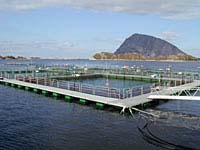
“Most of the farmed species on the ‘Best Choices’ list, with the exception of molluscs, are grown inland so that the systems are enclosed,” explained fishery research biologist Robert Mazurek. “Farmed salmon is grown in coastal waters…in concentrations of hundred of thousands, you get pollution from faeces, pesticides and antibiotics.”
Molluscan shellfish, on the other hand, act as a natural filter, Mazurek said, making the farmed variety environmentally-friendly.
The seafood guide, which was first produced in 1999 and is available on the Internet and in wallet card format, lists 58 popular West Coast seafood items.
In the “Avoid” category, 14 species are listed, including farmed Atlantic salmon, imported sturgeon caviar, Chilean sea bass, Atlantic and Icelandic cod, sea scallops, Atlantic swordfish and bluefin tuna.
Listed under “Best Choices” are 23 items. Those include farmed abalone, sablefish, Pacific halibut, Dungness crab, California market squid, sardines and albacore tuna.
Meanwhile, the 21 species rated “Proceed with Caution” are Oregon and California wild-caught salmon, American lobster, bay scallops, West Coast swordfish, farmed rainbow trout, yellowfin tuna, surimi, pollock and yellowfin tuna.
Mazurek said the aquarium may re-evaluate its stance on farmed Atlantic salmon if the industry curtails pollution and antibiotic and pesticide usage.
However, Odd Grydeland, president of BC Salmon Farmers Association (BCSFA), was quick to dismiss the aquarium’s list. “The regulations up here make it very sustainable. They should come up here and look at our farms,” he said. “There has to be a lot more professionalism in the criticism before it is taken seriously.”
The seafood guide is produced under the aquarium’s Seafood Watch program in conjunction with the Aquarium of the Pacific in Long Beach, CA, the Vancouver Aquarium Marine Science Centre in BC and the Seattle Aquarium.
Aquarium officials said the guide has been distributed to over 250,000 consumers so far and that they plan to produce other regional cards over the next two years across the nation.