Trout trilogy, part two Fly fishing

We have come to part two of our trout trilogy. This is what could said to be the most discussed form of fishing though out the entire world. Fly fishermen are a world unto them selves. Hours of studying insects and the winter months tying fly patterns made with exotic materials. All this is done to outsmart a creature that could never be described as overly intelligent. Yet there is an overwhelming pull all trout fishermen feel towards the world of tweed.
Skot
|
|
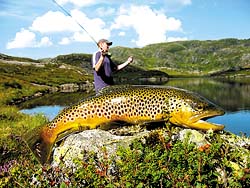
what more could you ask for |
|
|
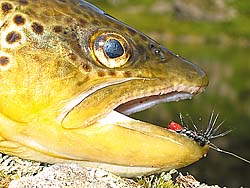
Silver Zulu is a fantastic wet fly |
|
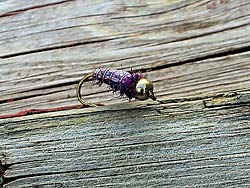
| A good example of a nymph |
| |
I often see fly fishermen as old nerds that where maybe once great school teachers or bank managers but thank god for the marketing magic of the big American firms. Young people have been attracted by high-tech toys and “gizmos” This has lead to more and more younger people are taking up the art of fly fishing.
Fly-fishing has a rich documented history which began some 700 hundred years ago. The earliest reference recorded was a 13th Century German romance written in about 1210 by Wolfram von Eschenbach. He mentions catching trout and grayling using a "feathered hook". The subject then appeared in the early 15th Century a manuscript, kept at the Bavarian abbey of Tegernsee, lists at least fifty different fly patterns for catching carp, pike, catfish, and salmon as well as trout and grayling. This was the forbearer for today’s modern fly-fishing. Today this can be split into three main classes: Wet fly, dry fly and nymph.
Nymph fishing. The term nymph describes the first phase of an insect’s life cycle. This is the earliest form of fly-fishing it can take place in the early spring. It is important to use sinking tippet or sinking line. When retrieving your fly lift the rod from time to time to imitate the rising nymph.
Perfect flies to use: Godard red larva, Buknall bloodworm, peeking cadis, Drifting caddis, Mark Brown, Pheasant tail nymph, Strip nymph, Hendrickson nymph, and Drifting cased caddis.
Wet flies: Wet fly fishing could be said to be the oldest of all forms of fly-fishing. Flies such as March Brown have been in use since the Middle Ages. The key with this form of fishing is to pick your conditions. Look for the signs of subsurface feeding. You will often see wakes made by moving fish. When using wet flies it is important to retrieve your fly with a regular jerking pattern.
I have noted that windier days tend to be the best for wet flies and just before the first of the May fly hatches.
Perfect flies to use: Mark Brown invita, Deep Spackle (LaFontaine), CDC emerger, Highland Dun, Blue Winged Olive, Lodge’s Dun and Red Quill.
Dry Fly: Dry fishing is all about imitating the insects that have hatched and are ready to begin the final faze of their life cycle. It is important to imitate the silhouette of the insect in question. For example Mayflies can hatch in there thousands and without the correct fly on the day you stand little chance of catching fish. Important equipment need for this type of fishing is floatation powder or cream.
Perfect flies to use: Parachute Floating Nymph, Yarn wing, March brown Dry Super pupper, Parachute spinner, Reed smut, Elk Hair caddis and Senator’s Choice.
There should be no reason why you should not consider buying a beginners rod and trying to catch your first trout on fly. I’ll never forget my fist fish!