Pollack fishing is it worth a shot?

Fashion dictates so much of our everyday life that it comes as a surprise that even the world of fishing is affected. Yes it’s true! Species that were once considered valuable table fish are now the domain of beginners and the “old timers”.
photo and text skot
|
|
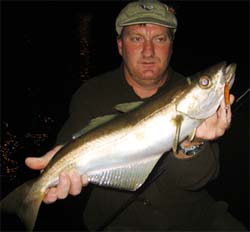
Our team fisherman Adrian has done it again. |
|
|
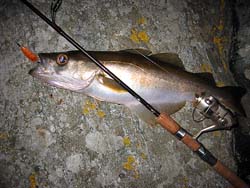
pollack on average are good around one and a half kilo |
|
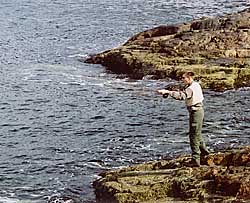
| Here is the land scape you are looking for. |
|
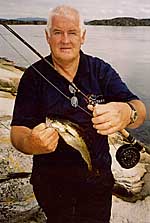
| The "old man" with a small fish. |
A classic example of this is Pollack. Recently I found myself in one of Norway’s old fashion fishmongers and was surprised to find that Pollack are no longer sold in any numbers. He explained to me that salmon, cod and coalfish where all people want today. This spurred me on to find why this was the case. Are they a lifeless sports fish or is there so few of them that hours of casting leave the average fisherman frustrated?
The first step is to find their habitat and their food source. Finally read every article about this form of fishing. This lead me to one conclusion, it was not beyond this journalist to catch a Pollack for dinner.
Where to find Pollack
Both boat fishermen and land-based fishermen have a chance to fish this species. In order not to fill pagers of information this particular article will focus on land based techniques. Pollack love to live under deep rock ledgers and vertical underwater cliffs. Try and find signs of kelp or features that can shelter smaller bait fish. After all if you find the food source you will find the predator.
Another great place to find these fish is around turbulent waters, where good tidal flows will concentrate baitfish and small prawns/shrimps. Good examples of this can be found along the entire west coast. Norway is dotted with small islands and headlands that create tidal flows where food is concentrated. Fishing these currents will often produce those bigger fish.
TIDES
Pollack feed on most tides, but the mid tide period will often fish best, simply because the depth of tide has been more constant. Rock platforms are usually good around low tide and for the first two hours of the flood, then again at high tide when the pollack roam around more. Peak tide periods sees them static and sheltering from the tidal flow.
WEATHER
The weather or water conditions play an important role in you success rate. For a start look for long periods of settled weather but a small swell is fine. Often a small swell will increase the fish’s appetite
Dusk and dawn are prime time for the pollack to the surface and it's this time of day when they're most vulnerable to lures and flies. Occasionally, pollack will take fish baits ledgered on the bottom, even at night, but this is not a recognised method of targeting pollack. Despite this Adrian and I proved that lures fished deep at night work well. I would recommend that this is a daytime activity.
Lures and Flies.
This is with out doubt the most important information you will need before you consider catching you prey. One is the type of line you use. I’ve always used monophiliment for one simple reason you catch fish. I have tried braided lines but have found with out a meter long leader of monophiliment you catch far less fish. I have compiled a top ten list of the best lures and flies.
The best lure for pollack
silda (white with green back 22-32 grams)
Atomsilda (red and black 12-20 grams)
Toby sea trout (white 12 gram
Active fritids seatrout spoon (18 grams)
Møre silda (silver models 12-22 grams
Elbe Sølvsilda (all models 12- 35 gram)
Elbe sea-trout favourite
Bluefox minnow chaser
Storm wobbler Møre (thunderstick 6cm)
And finally sildekongen from Elbe
Top ten flies
1.General practitioner
2 Grå tempelhund
3 Bomber
4 wolly bugger
5 white montana
6 JBK’s tobis
7 JBK’s shrimp
8 Glentana
9 Palmered Minkie
10 Dai’s lure
POLLACK FACTS
Pollack are first-class to eat, but you need to fillet the fish immediately and put the fillets in a cool box with ice packs. Left ungutted, the flesh quickly spoils. According to my local fishmonger.
Nobody really knows just how big pollack can grow, but commercially caught pollack have been recorded at 25 kilo’s and a 35 kilo plus fish was reputedly caught by long line in Ireland’s south-west a few seasons back.